National policy makers

Integrated Water Management Hub

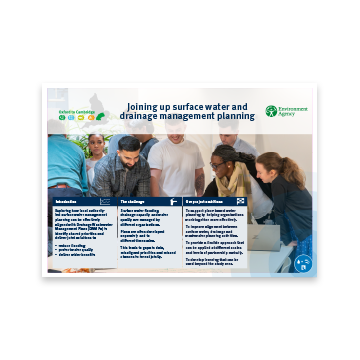
Joining up surface water and drainage management planning

Image to be added

Why is the project relevant to you?

As the government reshapes water planning, this project provides a practical and scalable approach to integrated water management, helping organisations align planning, investment and delivery while supporting government ambitions for more joined-up, place-based working. Proactive and collaborative working will remain important under any future arrangements, as flood risk planning will continue to operate through a separate process.

‍

Key messages for National policy makers

By creating a shared understanding of local challenges and opportunities across organisations, the approach provides a practical way to achieve more joined-up water management and better outcomes by aligning priorities, investment and delivery across local authorities, water companies and other partners.

‍

1
Call to action

It supports the government's ambitions for integrated, place-based planning and better coordination across organisations, which can reduce duplication and improve decision-making.

‍

2
Call to action

The Collaborative Approach helps address common challenges such as fragmented planning, misaligned investment cycles and limited coordination by providing a structured way for organisations to work together. It supports collaboration on shared activities, including identifying opportunities, exploring options and developing place-based solutions.

‍

3
Call to action

Developed through work in the Oxford to Cambridge Growth Corridor, the Collaborative Approach is designed to be scalable and applicable across England. While the project focused on improving alignment between Drainage and Wastewater Management Plans and surface water flood planning, the approach could be applied more widely to support organisations developing place-based solutions to shared challenges.

‍

4
Call to action

While the Collaborative Approach provides a framework for engagement, those responsible for preparing, delivering and supporting plans and processes will need to take the lead in applying it. Colleagues across the Defra group should look for opportunities to promote and encourage the use of the Collaborative Approach where it can add value.

‍

5
Call to action

Consider how the Collaborative Approach could inform future guidance and implementation of integrated water management initiatives. This is particularly important as we see changes in policy and the development of regional water planning arrangements.

‍

6
Call to action

Joining up surface water and drainage management planning

Downloads
Report
Joining up surface water and drainage management planning Overview
IWM
Report
Joining up surface water and drainage management planning – Non-technical summary
IWM
Report
Joining up surface water and drainage management planning – Final report
IWM
Report
A Placed-based Collaborative Framework for Partnership Working
IWM